
Location: Sudbury, Suffolk
Property Type: Commercial Weaving Unit
Survey Type: Asbestos Management Survey (CAR 2012 Compliance)
Survey Date: 09/08/2026

Our asbestos surveyors recently carried out a comprehensive asbestos management survey at a commercial weaving unit in Sudbury, Suffolk. The premises remain in active commercial use and form part of the type of industrial property that reflects Sudbury’s long-established association with textile manufacturing and weaving.
Sudbury is particularly well known for its historic silk and textile industry, with weaving continuing to be an important part of the town’s commercial identity. This industrial heritage means that Sudbury contains an interesting mixture of older workshops, factories, converted industrial buildings and more modern commercial premises. Where buildings have been constructed, extended or altered during periods when asbestos-containing products were commonly used, an asbestos management survey can be essential for identifying materials that require ongoing management.
Surveying a Working Weaving Unit in Sudbury
The purpose of the survey was to locate, as far as reasonably practicable, asbestos-containing materials that could be disturbed during the normal occupation and routine maintenance of the weaving unit.
As this was an operational commercial property, the inspection was undertaken with consideration for the way the building is used on a day-to-day basis. Our surveyor systematically inspected accessible areas of the premises, looking particularly closely at construction materials and components associated with older industrial buildings.
The survey included areas around the production space as well as accessible building fabric, roofing materials, rainwater goods and older components associated with the commercial use of the property.
Rather than assuming that materials contained asbestos based solely on their appearance or age, representative samples of suspect products were collected for laboratory analysis.
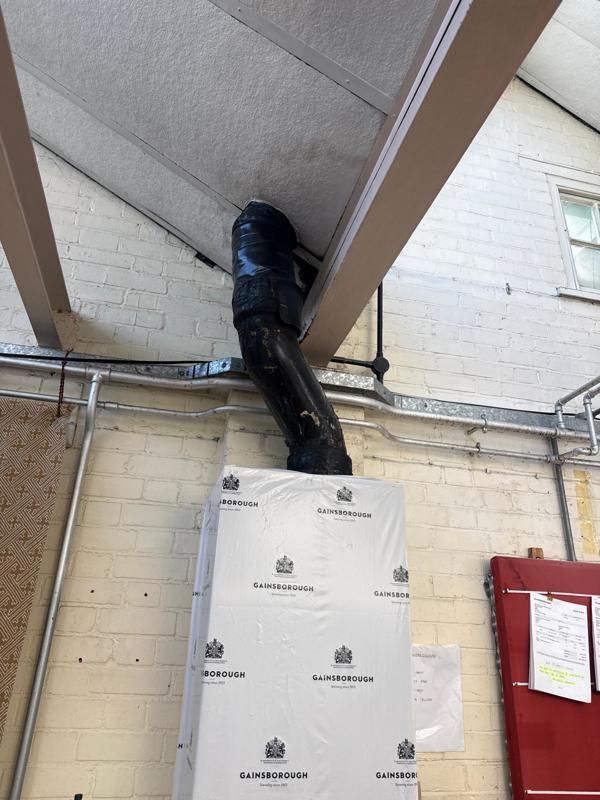
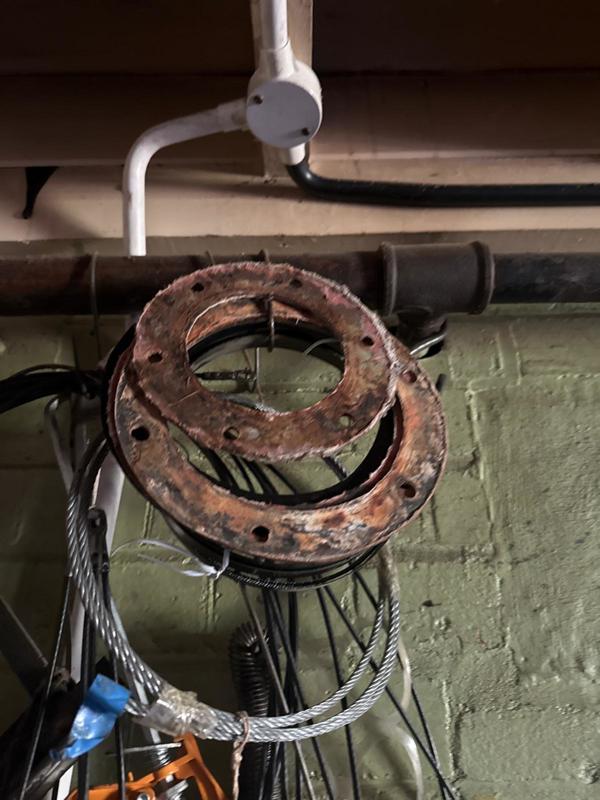
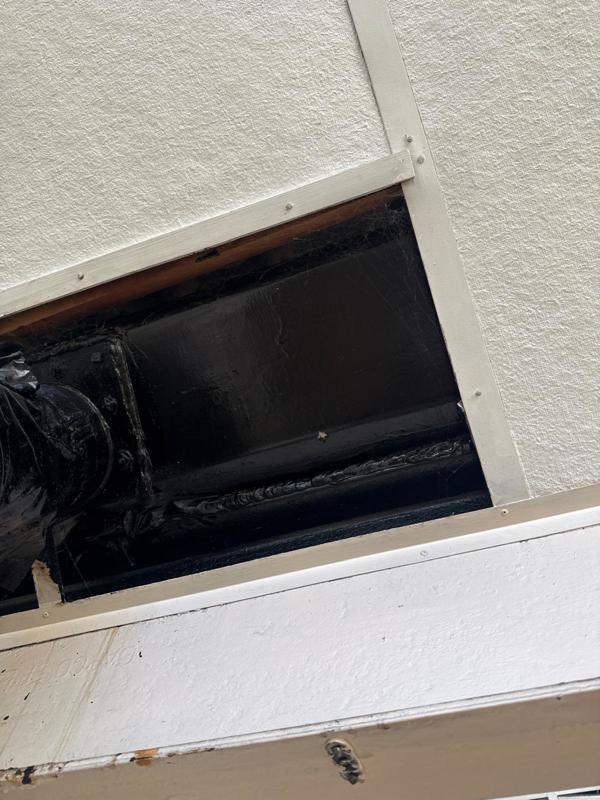
Old Gaskets Identified for Sampling
One of the materials investigated during the Sudbury asbestos survey was a selection of old loose gasket materials.
Gaskets are particularly relevant when inspecting older commercial and industrial premises. Historically, asbestos was incorporated into certain gasket products because of its resistance to heat and its ability to provide a durable seal.
Loose or redundant gasket materials can sometimes remain within plant areas, workshops, stores or alongside older equipment long after their original use has ended.
Because it is not possible to reliably determine asbestos content by visual inspection alone, representative samples of the suspect gasket material were carefully taken and submitted for laboratory analysis.
The location and condition of the material were also considered as part of the management survey so that appropriate recommendations could be provided within the final asbestos register.
Asbestos Cement Roofing to the Commercial Unit
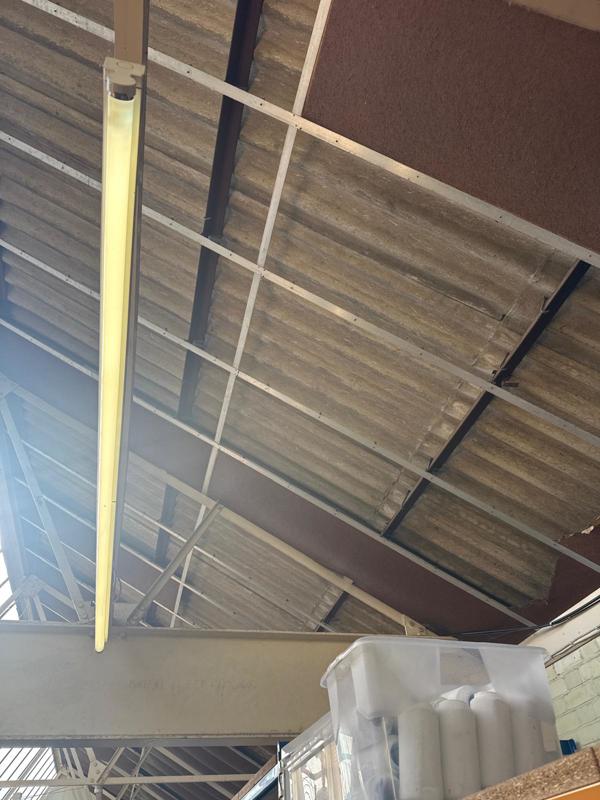
Another significant area of the inspection was the building’s cement roof.
Corrugated asbestos cement roofing is a familiar feature of many older commercial and industrial buildings throughout Suffolk. The material was widely selected for workshops, warehouses and manufacturing premises because it provided a relatively economical and durable roofing system.
A representative sample was taken from the suspect cement roofing at the Sudbury weaving unit.
Laboratory analysis subsequently confirmed the roof material contained asbestos.
The asbestos cement roofing was therefore recorded within the asbestos survey report, including its location, condition and appropriate management recommendations.
The presence of asbestos cement does not automatically mean that the roof requires immediate removal. Where cement products remain in suitable condition and are unlikely to be disturbed, appropriate management and periodic monitoring may be recommended. However, anyone planning future roof repairs, replacement works, installation of services or other work affecting the sheets must be made aware of their asbestos content.
Asbestos Cement Rainwater Goods
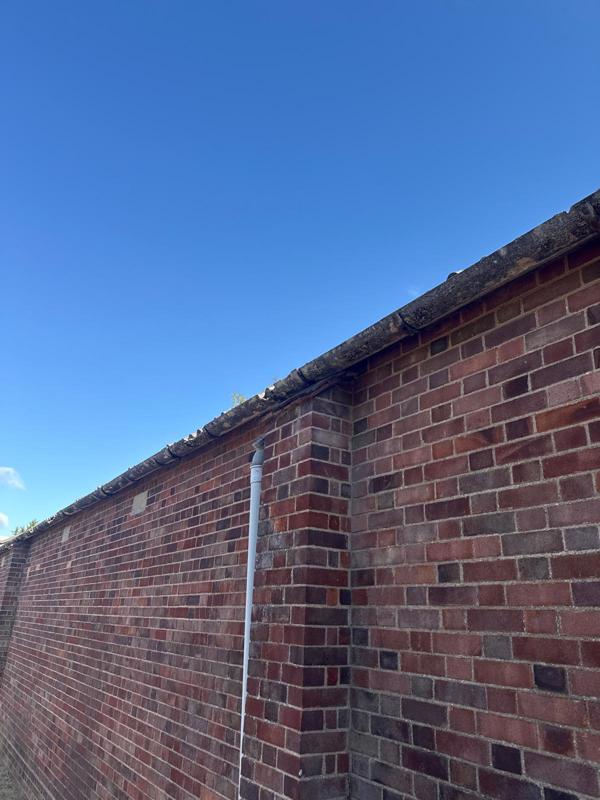
The external inspection also identified cement rainwater goods that were considered potentially asbestos-containing.
Older asbestos cement products were manufactured in numerous forms beyond corrugated roof sheets, including gutters, downpipes and other external drainage components. These products can easily be overlooked during less comprehensive inspections, particularly when they have been painted or weathered over many years. Representative sampling was therefore undertaken.
Laboratory analysis confirmed asbestos within the cement rainwater goods, and these items were added to the asbestos register alongside the cement roofing.
Their condition and likelihood of disturbance were assessed so that the building’s dutyholder has clear information for their continued management.
Other Suspect Materials Tested Negative for Asbestos
Importantly, the survey was not limited to the materials that eventually proved to contain asbestos.
A number of other suspect materials throughout the weaving unit were sampled during our inspection. Following analysis by the laboratory, these additional samples were confirmed not to contain asbestos.
Negative sample results are an important part of a detailed asbestos management survey. Many modern and non-asbestos building products can closely resemble asbestos-containing materials. Laboratory testing provides greater certainty and prevents materials from unnecessarily being managed as presumed asbestos.
The results therefore provided the client with a clearer picture of which materials actually require asbestos controls and which sampled materials can be recorded as non-asbestos.
Asbestos Management for Sudbury’s Industrial Buildings
Sudbury’s commercial property stock is particularly interesting because of the town’s relationship with manufacturing and textiles. Its location close to the Suffolk–Essex border and its long history as a market and industrial town have resulted in commercial premises of many different ages and construction types.
The continuing presence of textile and weaving businesses also gives Sudbury a commercial character that differs from many neighbouring Suffolk towns.
For owners, landlords and occupiers of older factories, weaving units, warehouses, workshops and commercial buildings in Sudbury, understanding whether asbestos is present is an important part of responsible property management.
At this particular weaving unit, laboratory analysis allowed the client to distinguish between confirmed asbestos and non-asbestos materials rather than relying on assumptions.
The key asbestos-containing materials identified were the cement roof and cement rainwater goods, while the old loose gasket materials and other suspect materials were sampled so their asbestos status could be accurately established within the completed report.
Need an Asbestos Survey in Sudbury?
Following completion of the site inspection and receipt of the laboratory results, the findings were incorporated into a detailed asbestos management survey report and asbestos register. This gives the person responsible for the Sudbury premises practical information about the location, type and condition of identified asbestos-containing materials, together with recommendations for their ongoing management.
The register can also be referred to before routine maintenance or repair work is undertaken, helping contractors understand where known asbestos is located before disturbing the building fabric. This survey demonstrates why commercial properties should be assessed individually. Even within one industrial building in Sudbury, laboratory testing identified a combination of confirmed asbestos-containing materials and other visually suspect products that proved to be asbestos-free.
By carrying out appropriate inspection, sampling and laboratory analysis, the weaving business now has a much clearer asbestos record for the premises and can manage the identified materials appropriately while the building continues in commercial use.