
Location: Ingatestone, Brentwood, Essex
Property Type: Large Scout Hall
Survey Type: Asbestos Management Survey (CAR 2012 Compliance)
Survey Date: 18/09/2026
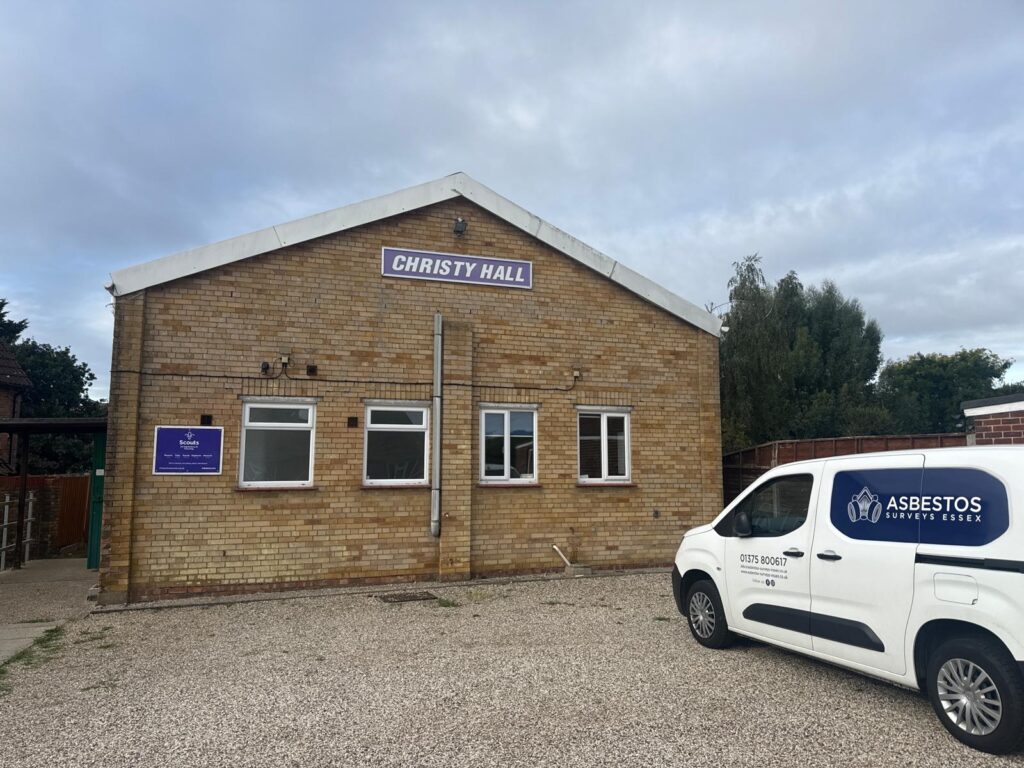
Our asbestos surveyor recently visited Ingatestone, Essex, to carry out a comprehensive asbestos management survey at a large Scout hall used by the local community.
Community buildings such as Scout halls present an interesting challenge from an asbestos surveying perspective. Unlike a conventional house or modern commercial unit, these buildings often develop gradually over many decades. Extensions are added, activity rooms are altered, kitchens and toilets are modernised and repairs are carried out as the needs of the organisation change. The result can be a building containing materials from several different periods.
At this particular property, our inspection identified a number of materials requiring further investigation. Representative samples were taken from suspected asbestos insulating board panels, tiles and the external damp-proof course for laboratory analysis.
Surveying a Community Building in Ingatestone
Ingatestone has a very different character from Essex’s larger towns. Centred around its historic High Street and surrounded by a mixture of established residential areas and countryside, the village has retained a strong community identity despite its excellent transport connections towards Chelmsford and London. Buildings used by local organisations form an important part of that community infrastructure.
A Scout hall can experience considerably different patterns of use from a typical commercial building. Weekly meetings, children’s activities, community events, storage of equipment and regular movement through the premises all have to be considered when assessing the condition and potential disturbance of suspect asbestos materials.
Our survey was therefore approached with the day-to-day use of the Ingatestone Scout hall firmly in mind.
Starting With the Hall Rather Than a Checklist
The survey began with our surveyor familiarising himself with the construction and layout of the premises.
Instead of assuming that materials of a similar appearance were necessarily the same throughout the building, the hall was divided into logical inspection areas. This allowed differences between the main building, ancillary rooms and later alterations to be considered individually.
The main hall formed an important part of the inspection, but the survey extended considerably further.
Accessible walls, ceilings, floors, partitions, cupboards, stores, corridors, kitchen and welfare facilities were examined, together with relevant external elements of the building. Particular attention was given to changes in construction.
A different wall finish, altered ceiling height or change in floor covering can sometimes indicate that an area was constructed or refurbished at a different time. In a community building that may have evolved over many years, these small clues can be important.
Insulating Board Panels – An Important Area for Investigation
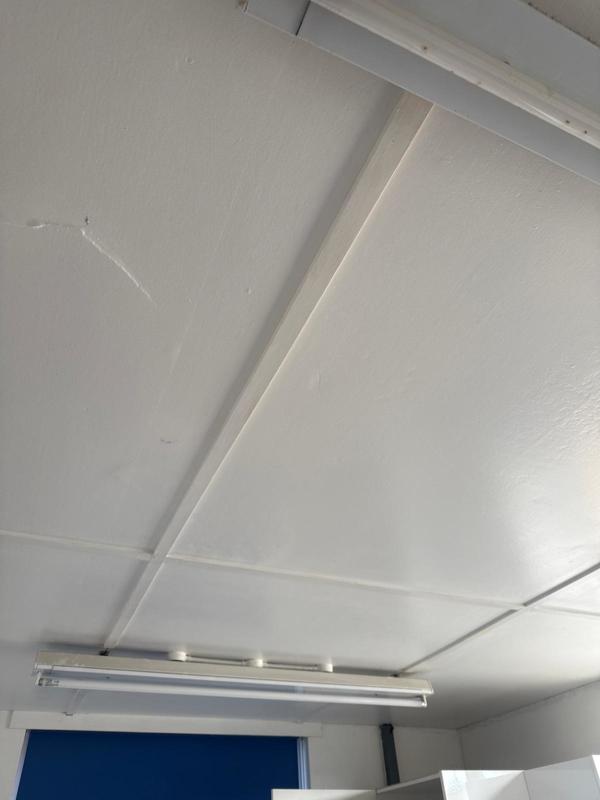
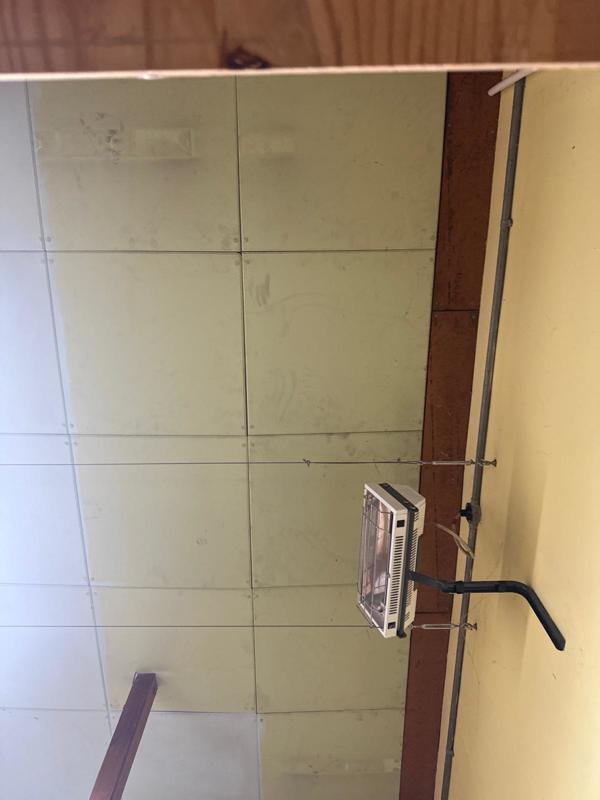
During the inspection, suspected asbestos insulating board panels were identified. These were considered significant enough to require representative sampling.
Asbestos insulating board, often abbreviated to AIB, was historically used for numerous purposes within buildings, including wall and ceiling panels, partitions, service enclosures, fire protection and other internal construction elements.
Visual identification alone is not sufficient to confirm whether a board contains asbestos. Our surveyor therefore carefully obtained representative samples from the suspect panels in accordance with appropriate sampling procedures. The samples were securely packaged, labelled and submitted for laboratory analysis. The location and condition of the sampled materials were also recorded as part of the survey.
This is particularly relevant within a Scout hall because wall and panel materials may be situated in areas subject to frequent activity. The likelihood of accidental impact or future maintenance therefore needs to be considered alongside the material itself.
Investigating the Tiles
Suspect tiles were also sampled during the Ingatestone survey. Tile products are frequently encountered during inspections of older community, educational and commercial buildings.
One difficulty is that refurbishment can disguise the true age of a floor. A room may have a relatively modern appearance while older tiles remain beneath later coverings, or original flooring may survive in less frequently refurbished areas such as stores and cupboards. Our surveyor therefore considered the flooring throughout the building rather than judging individual rooms solely by their current decorative finish. Representative samples of the suspect tiles were taken for laboratory analysis.
Where older tiles or associated materials remain within a building, their presence is particularly useful to establish before future flooring replacement, drilling, alterations or other maintenance activities are undertaken.
An Unusual Sample – The External Damp-Proof Course
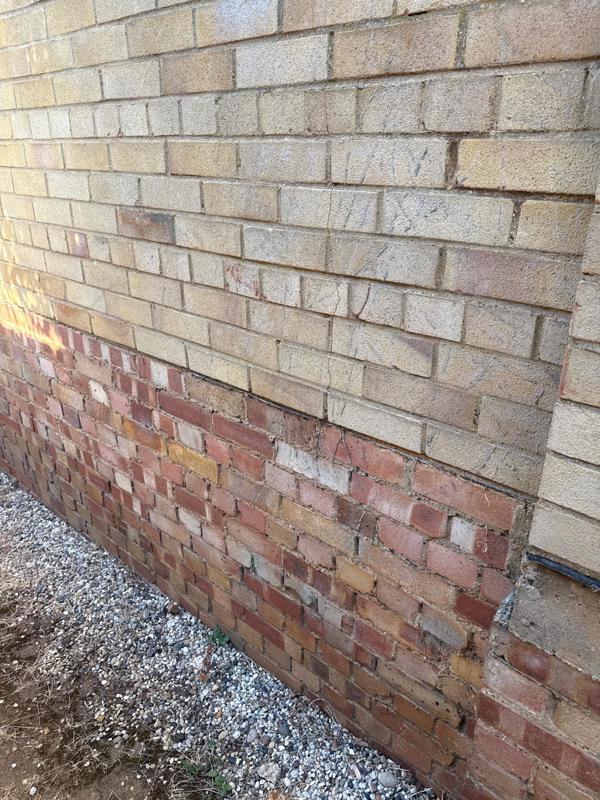
One feature that makes this Ingatestone asbestos survey particularly different from many of our residential and commercial inspections was the investigation of the external damp-proof course.
During the external inspection, the damp-proof course material was considered potentially suspect and a representative sample was taken. Asbestos is commonly associated with more recognisable building products such as cement sheets, textured coatings and insulating board. However, asbestos was historically incorporated into a much wider range of construction products. Bituminous and damp-proofing materials can therefore require consideration during an asbestos survey depending upon their age and composition.
Sampling the external damp-proof course ensured that this material was investigated rather than overlooked simply because it was situated outside the main occupied areas. This is an example of why a thorough asbestos management survey extends beyond the obvious internal surfaces of a building.
Inside and Outside the Scout Hall
The external inspection formed an important part of the overall assessment.
Our surveyor walked around the accessible perimeter of the Scout hall, examining relevant construction materials and looking for suspect products associated with the walls, roofline, drainage, panels, additions and other external building elements.
This exterior inspection also provided an opportunity to understand how different sections of the hall had been constructed.
For community buildings around established Essex villages such as Ingatestone, alterations and extensions can sometimes be much more obvious externally than internally. Changes in brickwork, roof profiles or construction materials may reveal different phases in a building’s development. Those observations can then inform the internal survey.
Considering How a Scout Hall Is Actually Used
An asbestos management survey should not simply produce a list of materials. The context in which those materials exist matters.
A Scout hall is an active environment. Chairs and tables are regularly moved, equipment may be stored against walls, displays can be attached to surfaces and rooms can be rearranged for different activities. That makes the position and condition of materials particularly relevant.
A material safely located in an inaccessible part of a building may present a very different management consideration from a panel positioned at a level where it could regularly be knocked or damaged. Our surveyor therefore considered not only what the material was, but also where it was and how the surrounding area was likely to be used.
Laboratory Analysis and the Survey Report
The samples taken from the insulating board panels, tiles and external damp-proof course were submitted for laboratory analysis.
Laboratory testing is essential because asbestos fibres cannot be reliably identified simply by looking at a material. Once the laboratory results are available, they can be combined with the surveyor’s site findings to produce the completed asbestos management survey report.
The report records the accessible areas inspected and details confirmed or presumed asbestos-containing materials where applicable. Information can include the material’s location, description, condition and appropriate recommendations for its ongoing management.
Photographs and location information provide a practical reference for the people responsible for the building.
Helping Protect Future Maintenance Work
The completed asbestos information is particularly valuable when maintenance or improvement work is required at the Scout hall. Community buildings inevitably need repairs. Electrical installations may require upgrading, flooring may eventually be replaced, heating systems can change and internal spaces may be adapted as the organisation’s requirements develop.
Having asbestos information available means known materials can be considered before routine maintenance begins.
However, an asbestos management survey is primarily intended for normal occupation and routine maintenance. If significant refurbishment is planned that will disturb areas not accessed during the management survey, an appropriate refurbishment asbestos survey may be necessary before those works commence.
Asbestos Surveys in Ingatestone, Essex
Ingatestone contains an interesting mixture of historic properties, established twentieth-century housing, schools, community premises, shops and other buildings that have been altered over generations.
That variety means asbestos surveys in the area should be approached individually. The age of a building provides useful background information, but its history of extensions, repairs and refurbishment is equally important. Our survey of this large Scout hall demonstrated exactly that.
The inspection extended from the main occupied spaces to the external fabric of the building, with representative samples obtained from the suspected insulating board panels, tiles and external damp-proof course.
The result provides those responsible for the premises with clearer information about the building materials present and a practical basis for future asbestos management.
Asbestos Management Surveys for Community Buildings in Essex
We carry out asbestos surveys across Ingatestone and the wider Essex area for a broad range of properties, including Scout and Guide halls, village halls, community centres, churches, schools, sports facilities, offices, shops, industrial premises and residential properties.
Every building has its own history. For a community property that may have served generations of local residents, understanding that history is an important part of understanding the materials from which it was built.
Need an Asbestos Survey in Ingatestone?
If you require an asbestos management survey in Ingatestone, Essex, or need asbestos surveying for a Scout hall, community building or other premises, contact Asbestos Surveys Essex to discuss the property and the appropriate type of survey.