
Location: Harlow, Essex
Property Type: Large Scout Hall
Survey Type: Asbestos Management Survey (CAR 2012 Compliance)
Survey Date: 18/09/2026

Our asbestos surveyor recently attended a three-bedroom house in Harlow, Essex, to carry out a detailed asbestos management survey.
Harlow is particularly interesting from an asbestos surveying perspective because of the town’s rapid expansion during the post-war period. Much of modern Harlow was developed as part of the New Town programme, creating large neighbourhoods of houses constructed during decades when asbestos-containing products were routinely incorporated into British buildings.
For this reason, surveying a house in Harlow is not simply about looking for the most recognisable asbestos products.
It is about understanding how post-war houses were constructed, repaired and subsequently modernised.
This particular property provided an excellent example. During the inspection, suspect materials requiring laboratory analysis included a cement flue, insulating board panels and small quantities of suspected insulating board debris located around nails within timber joists.
The final finding was especially noteworthy and demonstrates why a careful asbestos survey involves much more than checking walls and ceilings for obvious asbestos products.
A House Connected to Harlow’s New Town Story
Harlow’s modern identity was largely shaped by its designation as a New Town after the Second World War. New neighbourhoods, schools, shops, community facilities and thousands of homes were developed as the town expanded. The result is a distinctive local building stock containing significant numbers of twentieth-century properties.
Many Harlow houses have subsequently been modernised several times. Kitchens have changed, heating systems have been replaced, ceilings redecorated, extensions constructed and original internal finishes removed or covered. These changes can make asbestos surveying particularly interesting.
A house may appear thoroughly modern at first glance while retaining small elements of its original construction in areas that have received little attention over the decades. That possibility influenced our approach to this Harlow asbestos management survey.
Beginning With the Three-Bedroom Property as a Whole
Our surveyor started by considering the layout, approximate construction period and visible alterations to the house. The inspection then progressed systematically through the accessible areas of the property.
The hallway, living accommodation, kitchen, three bedrooms, bathroom, cupboards and other accessible spaces were examined, together with relevant external areas. Ceilings, walls, floors, panels, boxing and service-related materials were considered for products that could potentially contain asbestos.
However, the survey was not limited to large or obvious surfaces. Small construction details were equally important. That attention to detail ultimately became one of the defining features of this particular Harlow survey.
Sampling the Cement Flue
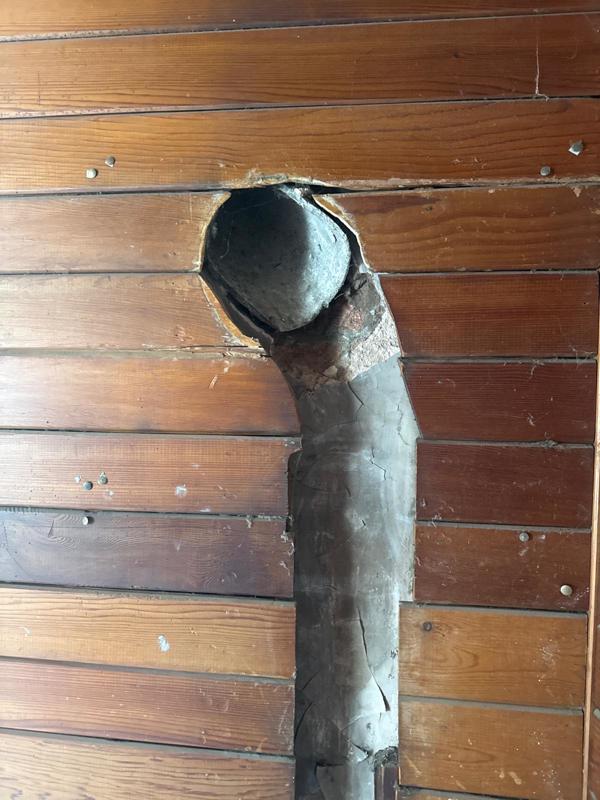
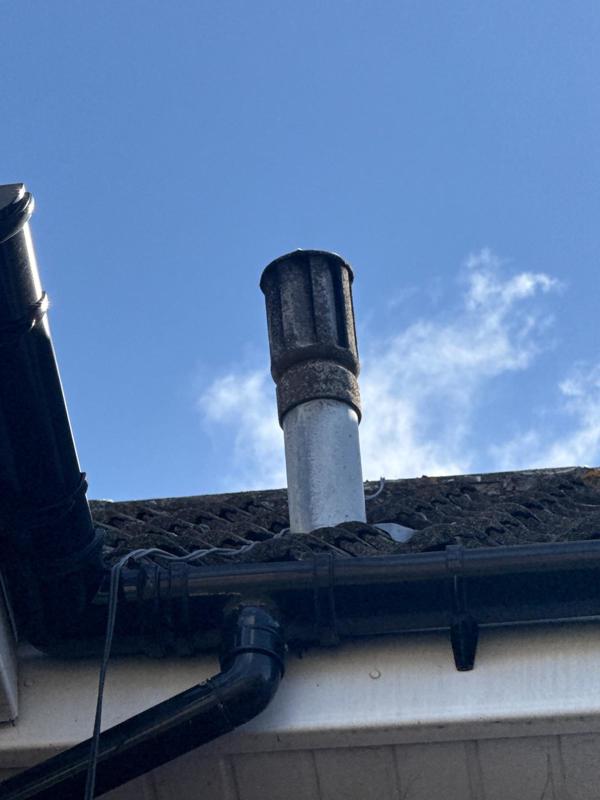
A suspected asbestos cement flue was identified during the inspection.
Asbestos cement was widely used historically because of its strength, durability and resistance to heat and weathering. Cement products can consequently still be encountered in and around older residential properties.
Flue components are one of the areas where asbestos cement may potentially be present.
The suspect flue at the Harlow property was recorded and a representative sample was carefully obtained for laboratory analysis.
Its presence was considered in relation to both its condition and location.
This is important because an asbestos-containing flue that remains intact and undisturbed presents a very different management situation from one that is damaged or scheduled to be removed during future heating or refurbishment work.
Insulating Board Panels Within the Property
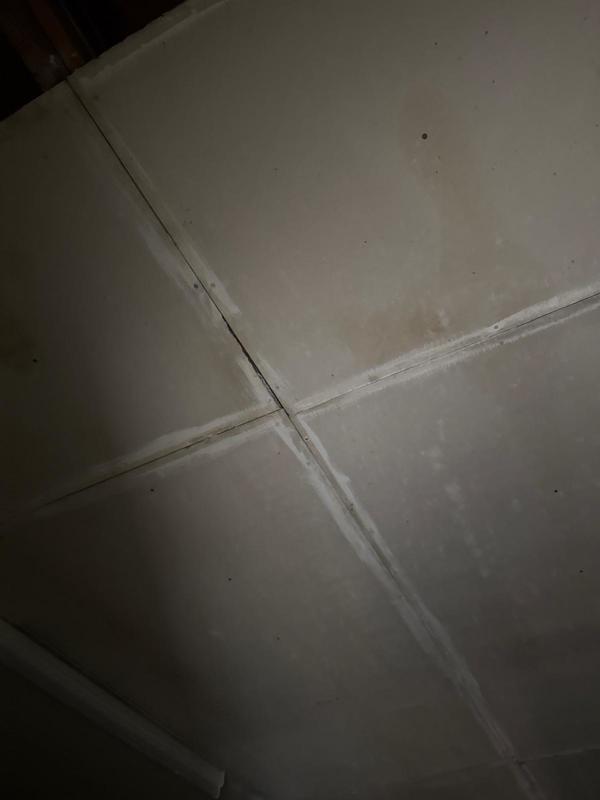
Our surveyor also identified suspected asbestos insulating board panels within the three-bedroom house.
Representative samples were taken to establish their composition.
Asbestos insulating board, commonly referred to as AIB, was historically used in buildings for purposes including panels, partitions, ceiling elements, service enclosures and fire protection.
It can sometimes be difficult to distinguish visually from non-asbestos boards.
For this reason, appearance alone should not be used to determine whether a suspect board contains asbestos.
The sampled panels were carefully recorded before representative material was obtained for analysis.
Identifying board products is particularly useful before maintenance or alterations because seemingly straightforward jobs such as drilling, removing panels or altering boxing can disturb the material.
The Detail That Made This Harlow Survey Different
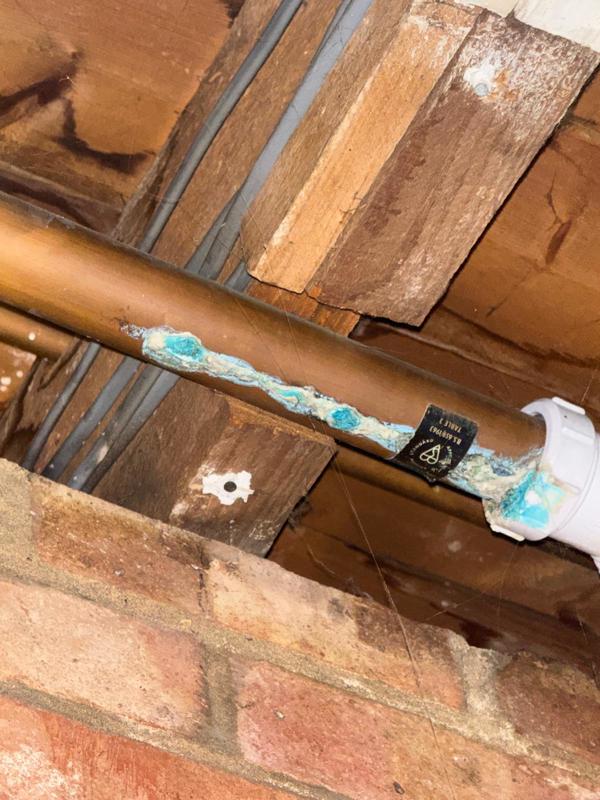
The most distinctive part of this inspection was not a large panel, ceiling or obvious asbestos cement product. It was small amounts of suspected insulating board debris around nails within the timber joists.
This is exactly the type of detail that can tell a surveyor something about the previous history of a building. Small fragments associated with fixings may indicate that a board material was previously installed in that location and subsequently removed or altered. Although the main material may no longer be present as a complete sheet, remnants can remain around nails, fixings and adjoining timber.
Rather than dismissing the fragments because of their limited size, our surveyor treated them as a suspect material.
A representative sample of the insulating board debris surrounding the nails within the timber joists was carefully collected for laboratory analysis. This finding made the survey particularly valuable.
It demonstrates why an asbestos inspection should consider evidence of materials that used to be present, as well as those that remain visibly installed.
Reading the History Left Behind by Previous Work
Older houses often contain clues to earlier refurbishment. A redundant fixing, change in paint finish, exposed edge, old adhesive or small piece of debris can indicate that a previous building material has been removed. This matters with asbestos.
Historical refurbishment work was not necessarily carried out to today’s asbestos standards, particularly where alterations took place many years ago. Small remnants of older materials can therefore sometimes survive in less obvious locations.
The timber joist finding within this Harlow property illustrates the importance of examining accessible construction details rather than relying on a superficial room-by-room inspection.
Our surveyor recorded what was physically present on the day of the survey and investigated suspect materials where appropriate.
Three Very Different Suspect Materials
One of the features that made this three-bedroom house especially interesting was the contrast between the materials sampled.
The cement flue represented a recognisable construction component.
The insulating board panels represented an installed internal building material.
The suspected insulating board debris around the joist nails represented evidence of a material that may previously have formed part of the building.
Together, they demonstrate the different ways in which potentially asbestos-containing materials can occur within a single residential property. Each sample was appropriately labelled and submitted for laboratory analysis.
This allows the asbestos survey report to be based on analytical evidence rather than assumptions made from visual appearance alone.
Why This Matters for Harlow Homeowners
Harlow contains a substantial number of homes originating from the twentieth century, including properties associated with the town’s major post-war expansion. Many have now undergone decades of improvement. A house may have replacement windows, a modern kitchen, updated bathroom and contemporary decoration while still retaining older building materials elsewhere.
For homeowners, landlords and property buyers, this is an important distinction. Modern appearance does not necessarily equal modern construction throughout. An asbestos management survey can help establish whether accessible suspect asbestos-containing materials remain within a property and provide a record of their locations and condition.
From Site Inspection to Asbestos Report
Following completion of the inspection, information gathered at the Harlow property is compiled into the asbestos management survey report alongside the relevant laboratory results.
Where applicable, identified or presumed asbestos-containing materials are recorded with information concerning their location, material type, condition and recommended management action. Photographs provide additional assistance in locating individual findings. The objective is to create information that is actually useful.
If asbestos-containing material is in good condition and unlikely to be disturbed, it may be possible to manage it safely in position rather than automatically removing it.
Where a material is damaged, vulnerable or likely to be affected by future work, appropriate action can be considered.
Planning Work to a Harlow Property
As with many houses of this period, future improvement work needs to be considered carefully.
A management survey is intended principally to identify asbestos-containing materials that could reasonably be encountered during normal occupation and routine maintenance.
It is not a substitute for an intrusive survey before major refurbishment.
If future work involves opening walls or ceilings, substantially altering rooms, removing building elements or accessing areas outside the scope of the original management survey, a suitable refurbishment asbestos survey may be required beforehand.
The debris discovered around the timber joists in this property is a particularly good example of why this distinction matters.
Hidden areas can contain evidence or remnants of older materials that simply cannot be fully assessed without intrusive access.
Asbestos Surveys in Harlow, Essex
Harlow’s development history makes it a distinctive part of Essex for asbestos surveying.
From the New Town neighbourhoods created during the post-war expansion to properties that have subsequently been extended and heavily modernised, the town contains homes with many different layers of construction.
That is why our asbestos surveys are based on the individual property rather than a generic list determined by postcode.
For this three-bedroom house, the survey identified several different suspect materials requiring further investigation, including:
* Cement flue
* Insulating board panels
* Insulating board debris around nails within timber joists
The last finding was particularly significant because it demonstrated how small remnants can provide important evidence about a property’s previous construction.
Residential Asbestos Management Surveys in Harlow
Asbestos Surveys Essex carries out asbestos surveys for houses, flats, landlords, commercial premises and other properties throughout Harlow and the surrounding Essex area.
Whether a property appears largely original or has been modernised repeatedly, our objective is to understand the building that exists today while remaining alert to evidence of what may have existed previously. This three-bedroom Harlow property was a perfect example.
The obvious materials mattered—but so did the tiny fragments left around old fixings.
For homeowners, landlords and property professionals looking for an asbestos survey in Harlow, Essex, a detailed asbestos management survey can provide valuable information about accessible asbestos-containing materials within the property and help inform their safe ongoing management.
Need an Asbestos Survey in Ingatestone?
If you require an asbestos management survey in Harlow, contact Asbestos Surveys Essex to discuss the property and the most appropriate survey requirements.