
Location: Ilford, East London
Property Type: Commercial Workshop
Survey Type: Asbestos Management Survey (CAR 2012 Compliance)
Survey Date: 25/10/2026

Investigating Potential Asbestos Materials Within a Working Commercial Vehicle Repair Facility
Asbestos Surveys Essex recently undertook an asbestos management survey at a commercial vehicle workshop in Ilford, a busy commercial district within the London Borough of Redbridge, historically part of Essex. The inspection involved assessing the accessible building fabric of premises used for vehicle servicing, mechanical repairs and associated workshop activities.
Unlike a conventional retail unit, office or domestic property, a commercial vehicle workshop presents a distinctive surveying environment. Industrial construction methods, extensive vehicle access areas, heavy-duty floor surfaces, high-level roofing systems and mechanical installations all require careful consideration when identifying potential asbestos-containing materials.
The purpose of the asbestos management survey was to establish, as far as reasonably practicable, whether asbestos-containing materials were present within accessible areas of the premises and to provide information that could assist the property owner or responsible dutyholder in managing potential asbestos risks.
The workshop environment was an important consideration throughout the inspection. Buildings used for commercial vehicle maintenance can undergo substantial alterations over their working lives, with changes to machinery, electrical systems, internal layouts and vehicle access arrangements.
Our survey approach therefore considered not only the visible construction materials but also the potential for older asbestos-containing products to remain within areas that had been modified during previous periods of occupation.
Ilford’s Industrial and Commercial Heritage
Ilford has developed considerably from its historic Essex origins into one of East London’s established commercial centres.
The district’s growth was influenced by the expansion of railway infrastructure, manufacturing, transport services and industrial activity. As residential neighbourhoods developed around Ilford, commercial workshops, garages, storage facilities and light industrial premises became an important part of the local economy.
Today, Ilford contains a mixture of traditional commercial buildings, modern business accommodation, vehicle repair facilities and industrial units.
Areas around the A118, Ilford Lane, High Road and the wider commercial corridors connecting Ilford with Seven Kings, Goodmayes and Barking reflect this varied development.
Some vehicle workshops occupy buildings constructed specifically for mechanical or industrial use, while others operate from former storage buildings, adapted commercial premises or older industrial units.
This varied building history is particularly relevant when considering asbestos.
Throughout much of the twentieth century, asbestos-containing products were incorporated into industrial buildings because of their durability, heat resistance and fire protection properties.
Although asbestos use was prohibited in the United Kingdom in 1999, materials installed before that date can remain within older commercial buildings.
Consequently, an operational vehicle workshop may contain modern servicing equipment and recently installed machinery while retaining original roofing materials, wall panels, insulation products or other historic construction components.
Initial Assessment of the Commercial Vehicle Workshop
The asbestos management survey began with consideration of the workshop’s general construction, internal arrangement and operational requirements.
Commercial vehicle workshops are typically designed to accommodate larger vehicles and equipment than ordinary domestic garages.
This can result in substantial open-plan working areas, increased ceiling heights, large access doors, exposed structural components and extensive mechanical or electrical installations.
The inspection methodology was developed around these characteristics.
Particular attention was directed towards accessible materials associated with the main workshop structure, internal accommodation, service installations and external building fabric.
An important aspect of surveying industrial premises is recognising that not every area can be accessed safely while normal operations are taking place.
Vehicle lifts, moving machinery, stored components and restricted working areas can affect the extent of an inspection.
The survey therefore required consideration of operational safety and the need to avoid unnecessary interference with workshop activities.
Any areas that could not be inspected would need to be clearly recorded within the survey report rather than assumed to be free from asbestos.
Inspection of the Main Vehicle Maintenance Area
The principal workshop area formed a central part of the asbestos management survey.
Vehicle maintenance facilities often contain large open spaces supported by steel frameworks, masonry walls or other industrial construction systems.
These buildings may have been constructed or extended at different times, meaning that materials of different ages can be present within the same workshop.
The inspection considered accessible ceiling and roof-level materials, wall surfaces, internal partitions and associated building components.
In older industrial buildings, asbestos cement sheeting was frequently used for roof coverings and wall cladding because of its durability and resistance to weathering.
Some premises may also contain historic asbestos insulating board used for partitions, fire protection or the enclosure of services.
The surveyor must distinguish between materials that are visually similar but have different compositions.
For example, modern fibre cement products and older asbestos cement sheets can sometimes appear alike. Their appearance alone is not sufficient to confirm whether asbestos is present.
Where suspected asbestos-containing materials are identified, appropriate sampling or presumption is required, depending on the circumstances and survey methodology.
The inspection also considered the condition of accessible materials and whether routine workshop activities could create a likelihood of accidental disturbance.
High-Level Roof Construction and Industrial Cladding
Roof construction is particularly important when assessing older commercial vehicle workshops.
Many industrial buildings in Ilford and the surrounding East London area feature pitched or shallow-sloping roofs designed to provide large internal working spaces.
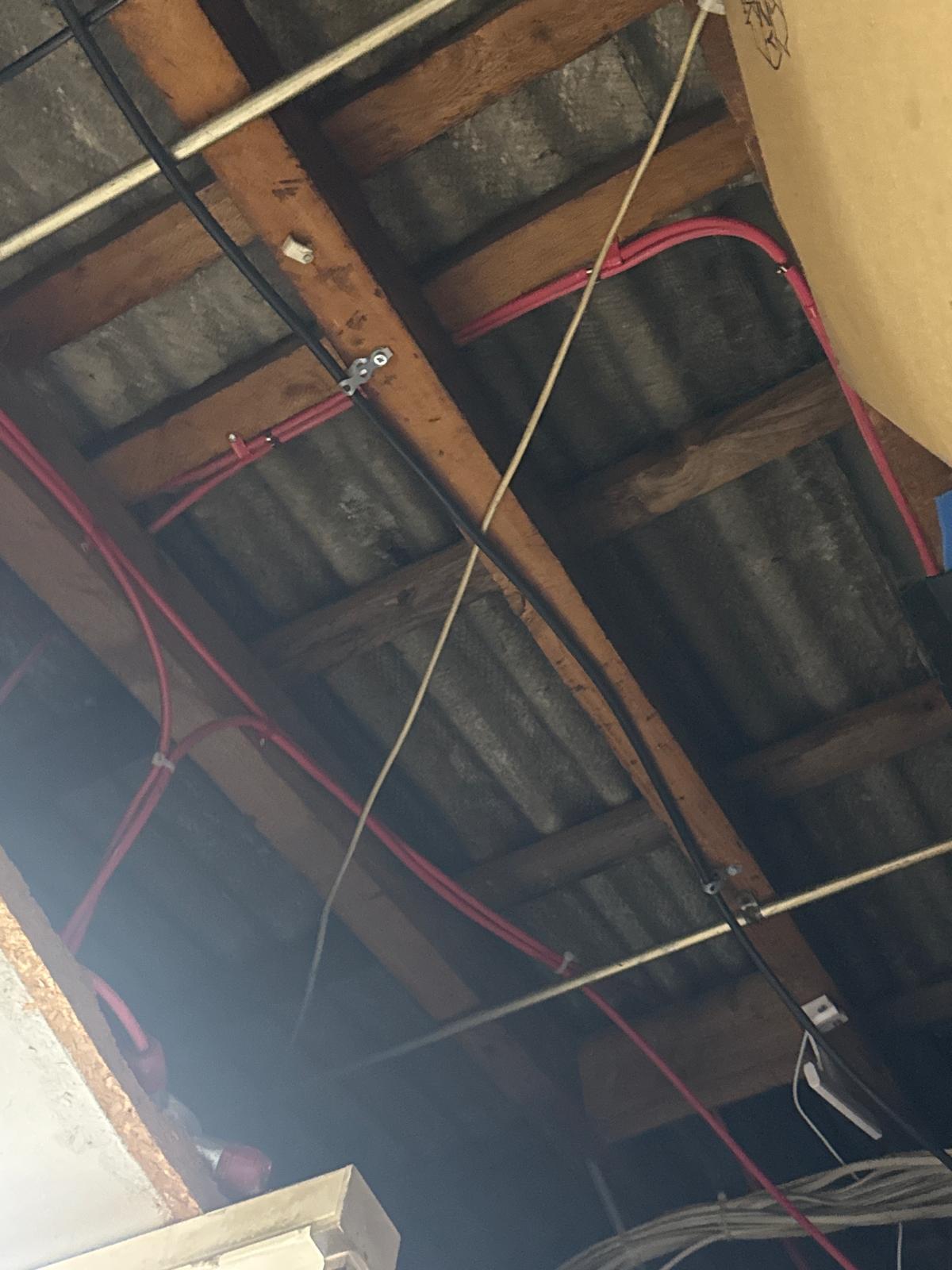
Historically, corrugated asbestos cement sheets were widely used on commercial garages, agricultural buildings, warehouses and industrial workshops.
These products can remain in place for many years, particularly where a building has not undergone major roof replacement works.
During an asbestos management survey, accessible roof materials are considered in relation to their construction, condition and potential for disturbance.
However, high-level roofing cannot always be examined closely without specialist access equipment.
Where roof areas are inaccessible, the survey report must identify the limitations of the inspection and any materials that have been presumed to contain asbestos.
The presence of suspected asbestos cement roofing can be particularly relevant to workshop owners planning roof repairs, installation of ventilation equipment or improvements to the building’s thermal performance.
Work involving drilling, cutting or removing roofing materials requires appropriate assessment before it begins.
The survey also considered the potential for asbestos-containing products within accessible wall cladding, soffits, rainwater goods and other external construction elements.
Vehicle Inspection Pits and Below-Ground Workshop Features
One of the features that can distinguish a commercial vehicle workshop from a conventional garage is the potential presence of vehicle inspection pits.
Inspection pits allow mechanics to access the underside of vehicles and may form part of the original construction of older maintenance facilities.
Where such features exist, they can introduce additional building elements requiring consideration during an asbestos survey.
Older service penetrations, pipework, wall linings and historic repair materials may be present around below-ground working areas.
The inspection methodology therefore recognised the importance of assessing accessible materials associated with workshop pits and similar structural features, where included within the survey scope.
Confined or below-ground spaces may present additional safety hazards unrelated to asbestos, including ventilation issues and the potential accumulation of hazardous atmospheres.
Consequently, entry into restricted pits or enclosed spaces should only be undertaken where appropriate safety arrangements are in place.
Where access cannot be achieved safely, limitations must be recorded.
Workshop Heating Systems and Historic Insulation
Commercial vehicle workshops frequently require heating arrangements suitable for large, open-plan industrial spaces.
Depending on the age and history of the premises, these may include suspended heaters, boilers, radiators, warm-air systems or other mechanical installations.
Older heating systems are relevant to asbestos surveying because certain historic insulation products contained asbestos.
Potential asbestos-containing materials may be associated with pipe insulation, boiler components, gaskets, heat-resistant panels or service enclosures.
The inspection considered accessible building services and associated construction materials within the agreed survey scope.
Particular care is required where older heating equipment remains in use or where redundant systems have been left in place following modernisation.
A disconnected pipe or obsolete heating installation may still contain historic insulation materials, even where it no longer serves an operational purpose.
Identifying these materials can be valuable when planning future maintenance or removal of redundant services.
Electrical Installations and Workshop Distribution Equipment
A commercial vehicle workshop depends on reliable electrical installations to operate equipment such as vehicle lifts, compressors, diagnostic systems, power tools and lighting.
As businesses expand, electrical distribution systems may be upgraded or extended to accommodate additional machinery.
This can result in a combination of original and modern electrical installations within the same building.
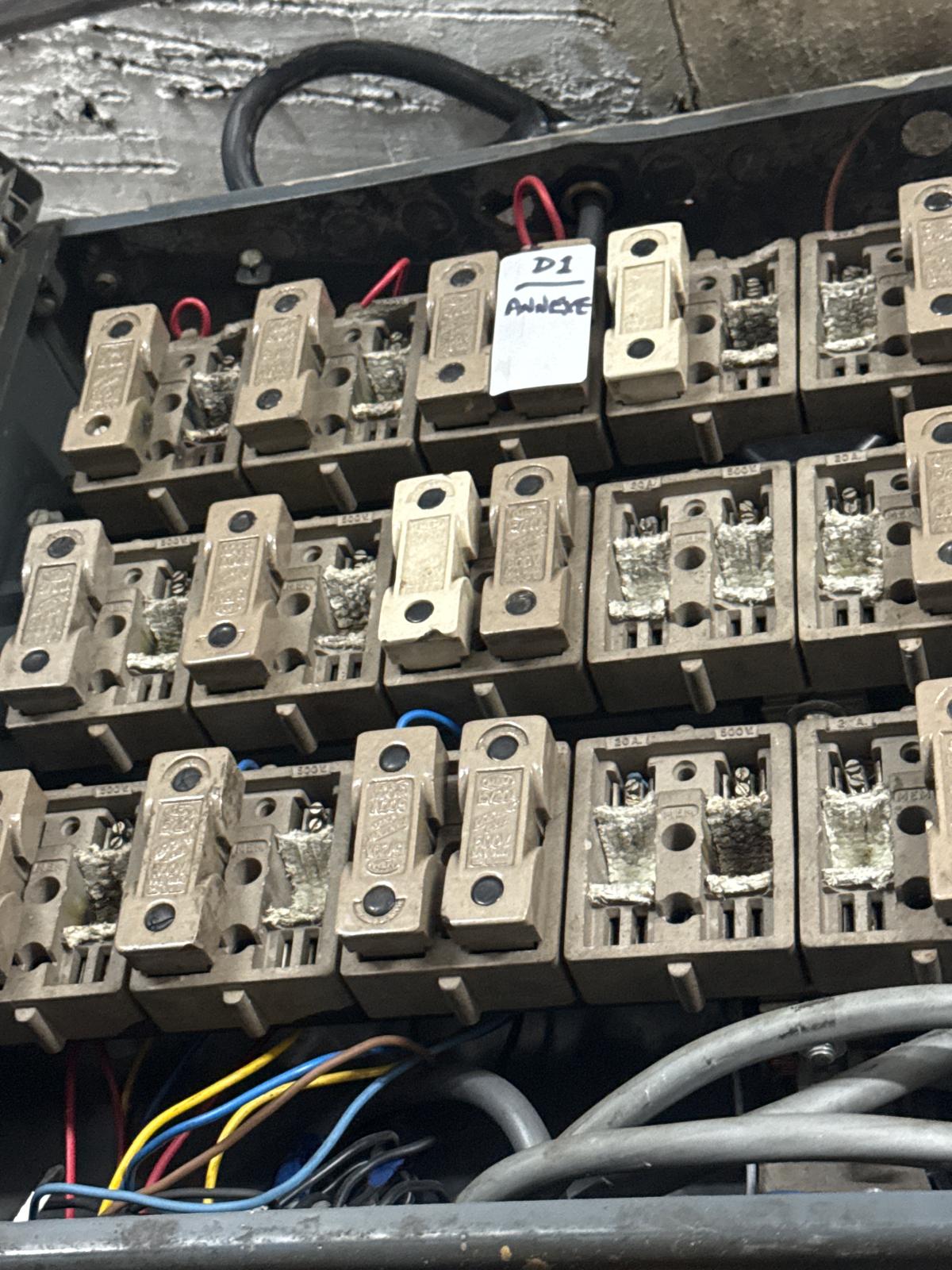
From an asbestos management perspective, the concern is primarily with historic building materials associated with electrical cupboards, distribution boards and service enclosures.
Older asbestos insulating board was sometimes used as a fire-resistant material around electrical equipment, while certain historic components incorporated asbestos for insulation or heat resistance.
The survey included consideration of accessible materials associated with relevant electrical installations.
However, live electrical equipment must not be dismantled during an ordinary asbestos management survey without appropriate isolation and safety arrangements.
Any inaccessible areas or suspected materials requiring further investigation should be documented so that suitable precautions can be taken before maintenance work.
Offices, Reception Areas and Staff Facilities
Although the main workshop area is the most obvious feature of a commercial vehicle repair business, supporting accommodation can contain a different range of potential asbestos-containing materials.
Commercial garages may incorporate customer reception areas, administrative offices, staff rooms, kitchens, toilets and storage accommodation.
These spaces are often finished in a manner similar to conventional commercial offices.
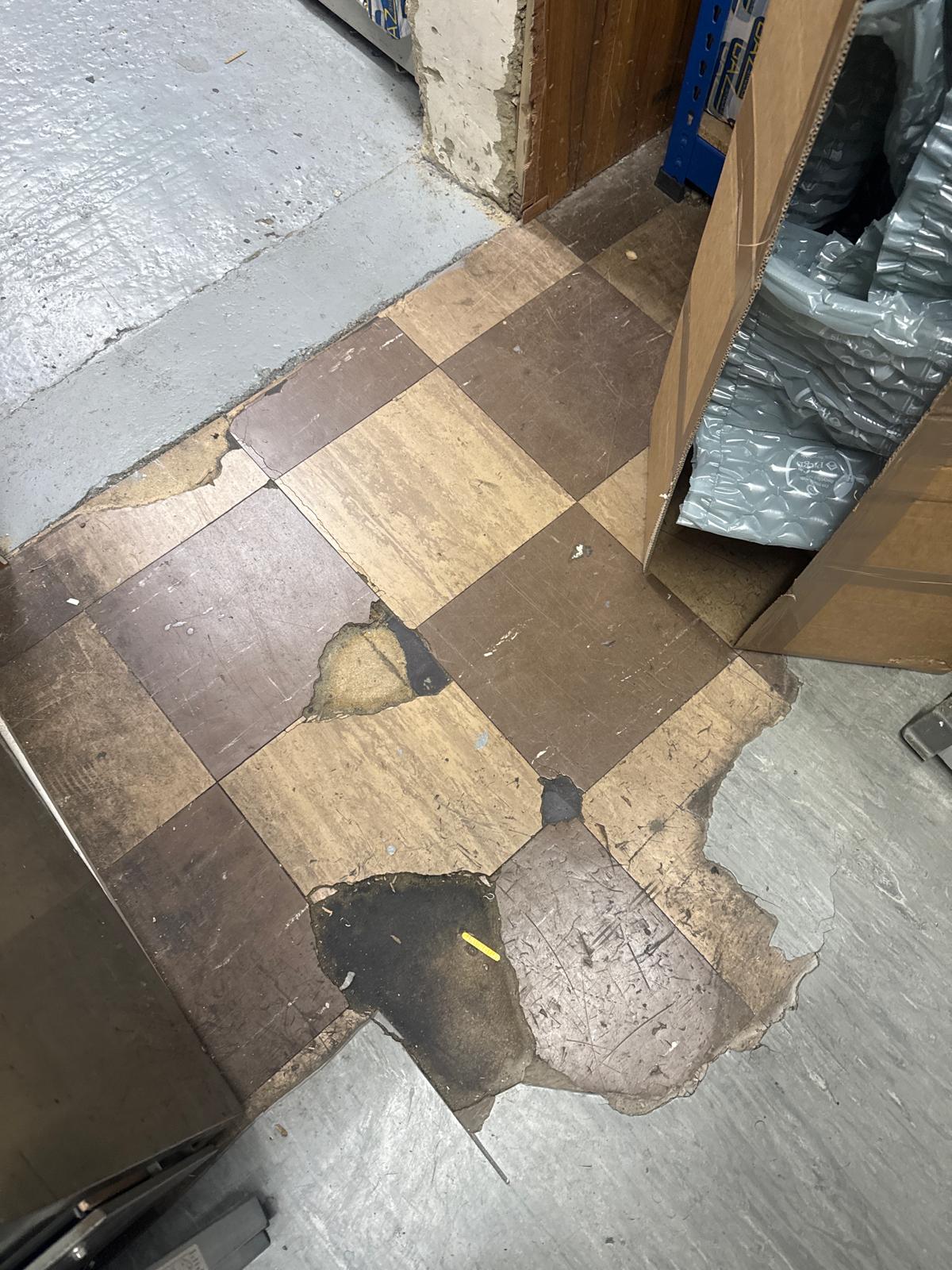
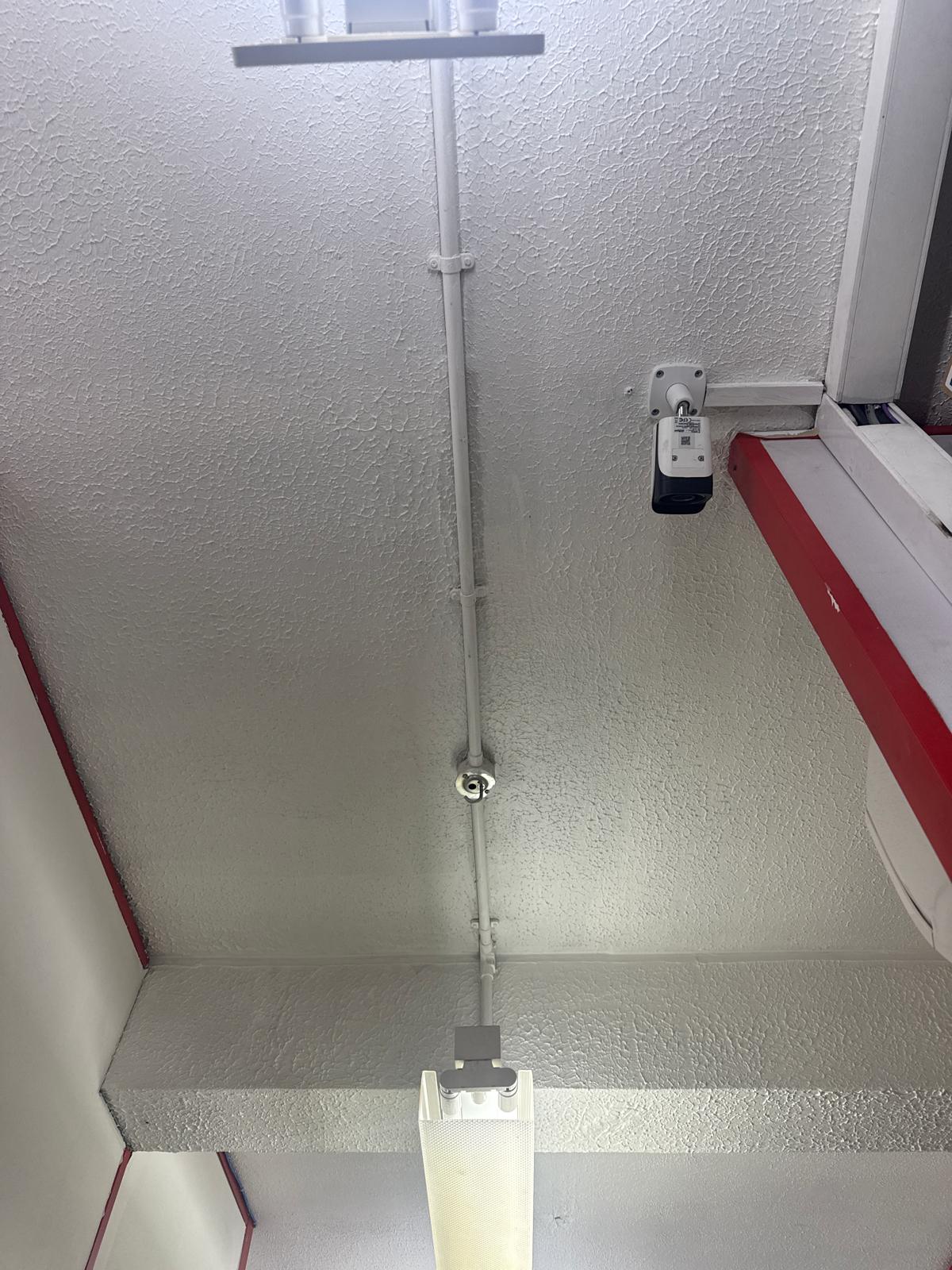
Depending on their age and refurbishment history, potential asbestos-containing materials may include textured ceiling coatings, older floor tiles, bituminous adhesives, partition boards and service boxing.
The survey methodology considered accessible materials within the relevant supporting accommodation.
These areas can be particularly important because they may have undergone separate refurbishment programmes from the main workshop.
For example, a reception office might have been modernised while older flooring or ceiling materials remain concealed beneath newer finishes.
A management survey is not intended to investigate every concealed layer of a building, so the limitations of non-intrusive inspection must be understood.
Storage Areas and Spare Parts Accommodation
Vehicle repair workshops frequently require dedicated storage areas for spare parts, tools, tyres and maintenance equipment.
These spaces may be positioned within the main workshop or separated by internal partitions.
In older industrial buildings, storage accommodation can retain construction materials that have not been altered for many years.
Potential asbestos-containing materials may be associated with internal wall linings, ceiling panels, service enclosures and historic building modifications.
The inspection considered accessible construction materials within storage accommodation included in the survey scope.
The presence of stored equipment or stock can restrict access to certain walls and floor areas.
Where materials are concealed by fixed shelving, heavy machinery or stored items, those limitations should be recorded.
This ensures that the asbestos register does not incorrectly imply that every surface or concealed area has been inspected.
Asbestos and Historic Vehicle Workshop Activities
Commercial vehicle workshops have a historical association with asbestos that extends beyond the building fabric itself.
Asbestos was formerly used in some automotive friction products, including brake linings and clutch components.
However, it is important to distinguish between asbestos-containing building materials and asbestos potentially associated with vehicle components or workshop processes.
An asbestos management survey under the usual building survey methodology primarily addresses asbestos-containing materials within the premises.
It does not automatically constitute an assessment of every vehicle component, piece of equipment or historic waste material that may be present.
Where there are concerns about legacy automotive asbestos products, contaminated equipment or historic workshop waste, these may require separate assessment and appropriate specialist advice.
This distinction is particularly relevant in long-established repair facilities where older equipment or redundant materials may have been retained.
Sampling of Suspected Asbestos-Containing Materials
Visual examination alone cannot always confirm whether a building material contains asbestos.
Where appropriate, representative samples of suspected materials can be collected and submitted to a suitably accredited laboratory for analysis.
Potential materials requiring investigation in a commercial vehicle workshop may include:
* Corrugated asbestos cement roof sheets.
* Asbestos cement wall cladding or panels.
* Asbestos insulating board associated with partitions or service enclosures.
* Decorative textured coatings.
* Historic floor tiles and associated adhesives.
* Pipe insulation and heat-resistant building products.
* Asbestos cement flues or other service components.
Sampling decisions must take account of the condition of the material, accessibility, operational safety and the agreed survey scope.
Where sampling is not appropriate, materials may be presumed to contain asbestos and managed accordingly.
For this case study, specific laboratory results have not been included because confirmed sample findings were not supplied.
Assessing Material Condition in an Industrial Environment
The condition of asbestos-containing materials is particularly important in premises used for commercial vehicle maintenance.
Industrial workshops can experience regular movement of large vehicles, vibration from machinery, maintenance activity and occasional impact damage.
These factors may increase the potential for disturbance of certain building materials, depending on their location and condition.
An asbestos management survey includes an assessment of relevant material characteristics, including product type, surface treatment, damage and deterioration.
This information contributes to the material assessment recorded in the asbestos register.
A material positioned at high level and unlikely to be disturbed may require a different management approach from a damaged panel located beside an active maintenance area.
However, asbestos identification does not automatically mean removal is necessary.
Where asbestos-containing materials remain in good condition and can be managed safely, appropriate monitoring and control measures may be sufficient.
Asbestos Management Responsibilities for Workshop Owners
Under the Control of Asbestos Regulations 2012, those responsible for the maintenance and repair of non-domestic premises have duties relating to the management of asbestos.
These responsibilities can apply to commercial vehicle workshops, industrial units, garages and other business premises.
Depending on the lease and maintenance arrangements, responsibility may rest with the property owner, landlord, tenant or another party with control over the relevant areas.
The dutyholder must take reasonable steps to determine whether asbestos is present, assess the risks and establish appropriate management arrangements.
An asbestos management survey provides information to support these responsibilities.
The resulting asbestos register should be available to relevant contractors and maintenance personnel before work that could disturb building materials takes place.
This is particularly important in a vehicle workshop where equipment installations, structural alterations and routine maintenance may involve drilling, cutting or accessing older construction materials.
Planning Future Workshop Improvements and Refurbishment
Commercial vehicle workshops frequently evolve to accommodate new servicing equipment, larger vehicles and changing business requirements.
A workshop owner may decide to install additional vehicle lifts, upgrade electrical systems, replace roof coverings or reconfigure internal office accommodation.
These improvements can involve intrusive work to the building fabric.
Although an asbestos management survey provides important information about accessible materials, it is not a substitute for a refurbishment survey where planned works could disturb concealed construction materials.
A suitable asbestos refurbishment survey should be undertaken before intrusive alterations commence.
This is especially important in older industrial buildings where original materials may remain behind modern finishes or within structural enclosures.
Identifying asbestos before work begins can help prevent accidental disturbance, reduce unexpected project delays and support safer working arrangements.
Why Industrial Buildings in Ilford Require Individual Assessment
Ilford’s commercial property landscape reflects decades of changing business activity, transport development and urban expansion.
Older vehicle workshops may have originated as small engineering premises, transport depots or general-purpose industrial buildings before being adapted for modern vehicle maintenance.
Other facilities may occupy more recently constructed industrial units with different building materials and layouts.
Even neighbouring workshops can have very different construction histories.
For this reason, an asbestos management survey should consider the individual characteristics of the premises rather than relying on assumptions about the building’s age or current use.
The inspection of a commercial vehicle workshop requires an understanding of industrial roofing, mechanical services, electrical installations, supporting accommodation and the operational risks associated with a working garage.
A structured inspection provides a more useful basis for ongoing asbestos management.
Commercial and Industrial Asbestos Surveys in Ilford and East London
At Asbestos Surveys Essex, we carry out asbestos surveys for a wide range of commercial and industrial properties, including vehicle workshops, garages, warehouses, engineering units, offices, retail premises and mixed-use buildings.
Our services cover Ilford, Seven Kings, Goodmayes, Newbury Park, Barking, Gants Hill, Redbridge, Romford and the wider East London and Essex areas.
We understand that industrial buildings require a different surveying approach from domestic properties, particularly where large open-plan areas, specialist equipment and historic construction materials are involved.
An appropriately scoped asbestos management survey can help property owners, landlords and business operators understand potential asbestos risks and establish suitable management arrangements.
Arrange an Asbestos Management Survey in Ilford
Whether you own a commercial vehicle workshop, operate a mechanical repair business or manage an industrial unit in Ilford, identifying potential asbestos-containing materials is an important part of responsible property maintenance.
Older workshops can contain asbestos within roofing materials, wall panels, internal finishes and building service installations, even where the premises have been modernised.
If you require an asbestos management survey for a commercial vehicle workshop, garage or industrial property in Ilford, contact Asbestos Surveys Essex to discuss your premises and arrange a professional asbestos inspection.