
Location: Chelmsford, Essex
Property Type: Three Bedroom House
Survey Type: Asbestos Management Survey (CAR 2012 Compliance)
Materials: Various textured coatings, floor tiles and garage roof
Survey Date: 20/11/2026

Asbestos Surveys Essex carried out an asbestos management survey at a three-bedroom house in Chelmsford. The survey included samples of various textured coatings, floor tiles and the garage roof. The garage roof was a distinct part of the project: it raised a question about an external structure as well as the finishes inside the house.
For a homeowner, these materials are likely to come up in conversations with different trades. A decorator might ask about a textured finish, a flooring fitter about tiles and a roofer about the garage covering. Putting the survey information in one place makes those conversations easier, provided each material can be matched to the correct location. The point of this Chelmsford survey was to gather information about the property for normal use and foreseeable maintenance.
Looking at the house and garage as one property
A three-bedroom house can be described in a line, but a survey brief needs more than the bedroom count. If the property has a garage, establish whether that structure is part of the instruction. If an older finish remains in several parts of the house, describe the individual locations rather than treating them as one continuous surface. In this case, materials were sampled inside the house and at the garage roof, giving the survey two distinct settings.
That distinction suits the way many homeowners in Chelmsford plan work. On a property in an established neighbourhood such as Springfield, Moulsham or Great Baddow, a homeowner might renew internal finishes as part of one project and deal with the garage as a separate job. The garage may have had a different maintenance history from the house. Its inclusion can make the survey more useful to the person arranging work outside, even if the immediate concern that prompted the enquiry was indoors. These neighbourhoods are examples of the wider Chelmsford area, rather than the address of this project.
It helps to think of the survey as a record of individual materials in identifiable places. If a household commissions work in stages, that record can be checked against each job. If the flooring work is brought forward but the roof work is deferred, the homeowner can still find the information relevant to each contractor when it is needed.
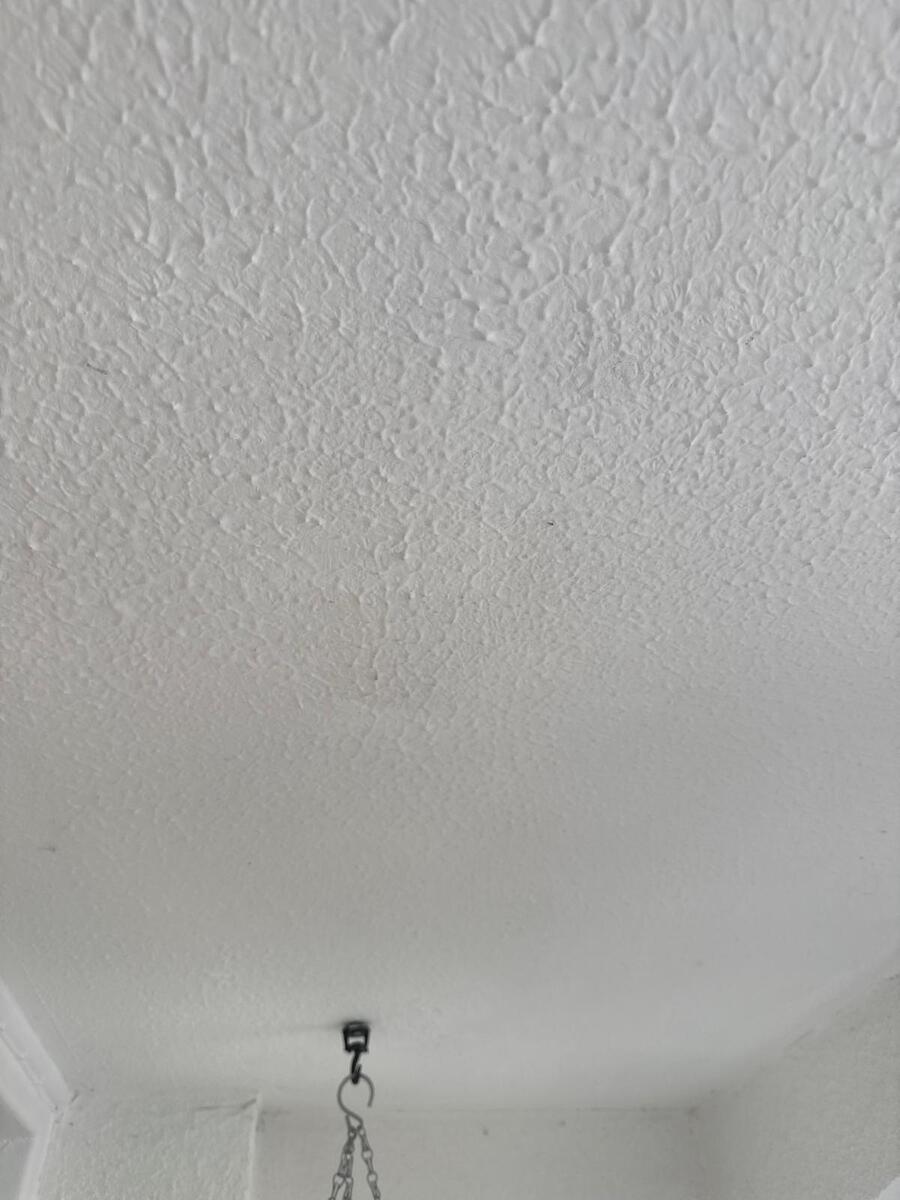
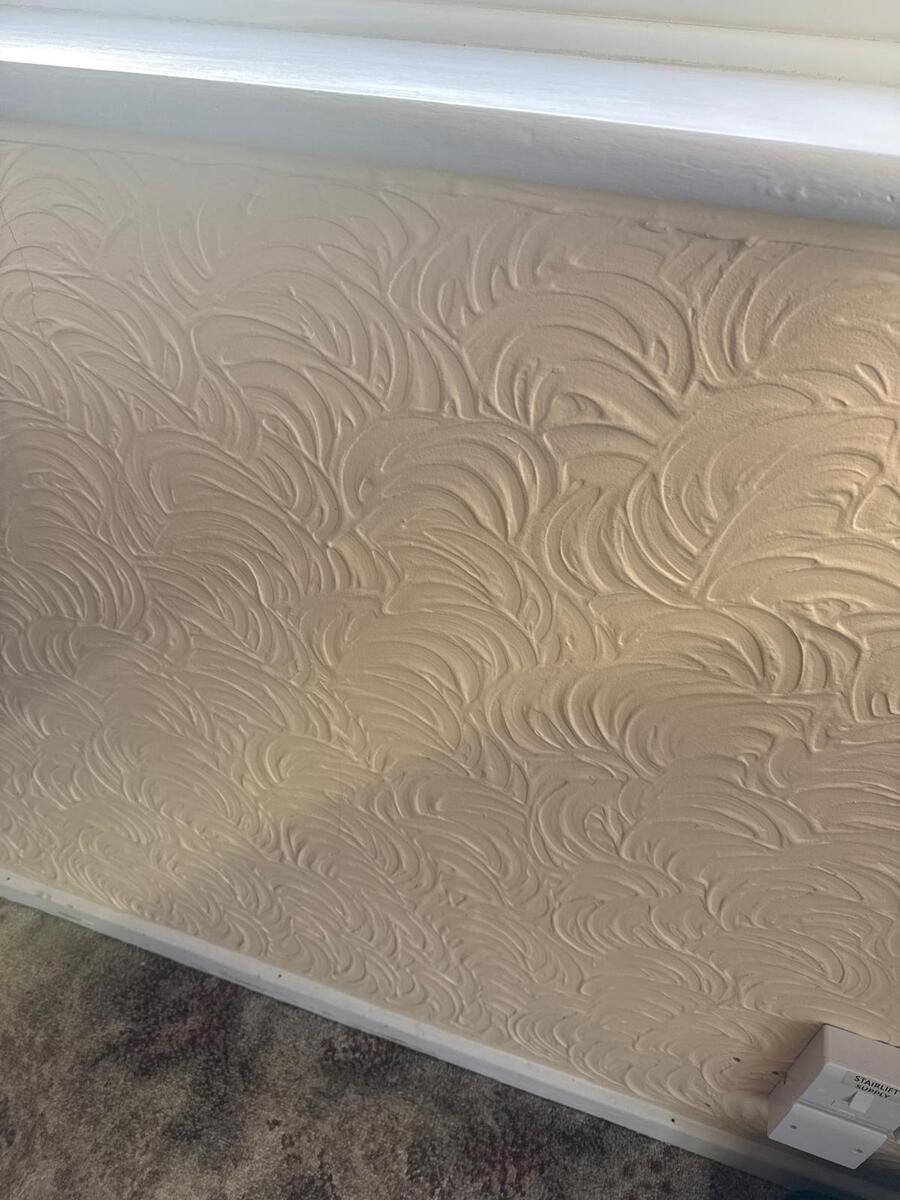
Various textured coatings sampled inside the house
Textured coatings can look very similar after painting, even when they were applied at different times. A pattern that appears to match across two surfaces does not reliably show that both finishes were made with the same product. The term “textured coating” describes a type of finish; it does not identify its asbestos content. This Chelmsford survey included samples of various coatings so the materials sampled could be assessed with reference to their own locations.
The distinction is useful when a property has been decorated in stages. Imagine a homeowner arranging maintenance to a finish on one side of the house after having work done elsewhere. An old invoice or a previous sample result from a different room may not answer the new contractor’s question. The useful starting point is the sampling record: which coating was sampled, where was it, and what did the survey say about the area to which the information applies?
A sample of a coating is also distinct from a sample of the surface beneath it. If a future job calls for alterations behind a finish, the survey needs to be checked against the building elements the contractor plans to disturb. A result relating to a decorative layer should not be taken to establish the composition of boards, concealed linings or voids behind it.
For someone reviewing the report later, preserve the description of the coating and its location together. If rooms are renamed or used differently after a sale, a plan or photograph can be more useful than a room label alone. This is particularly relevant when similar looking coatings are present in several areas and the new owner did not commission the original survey.
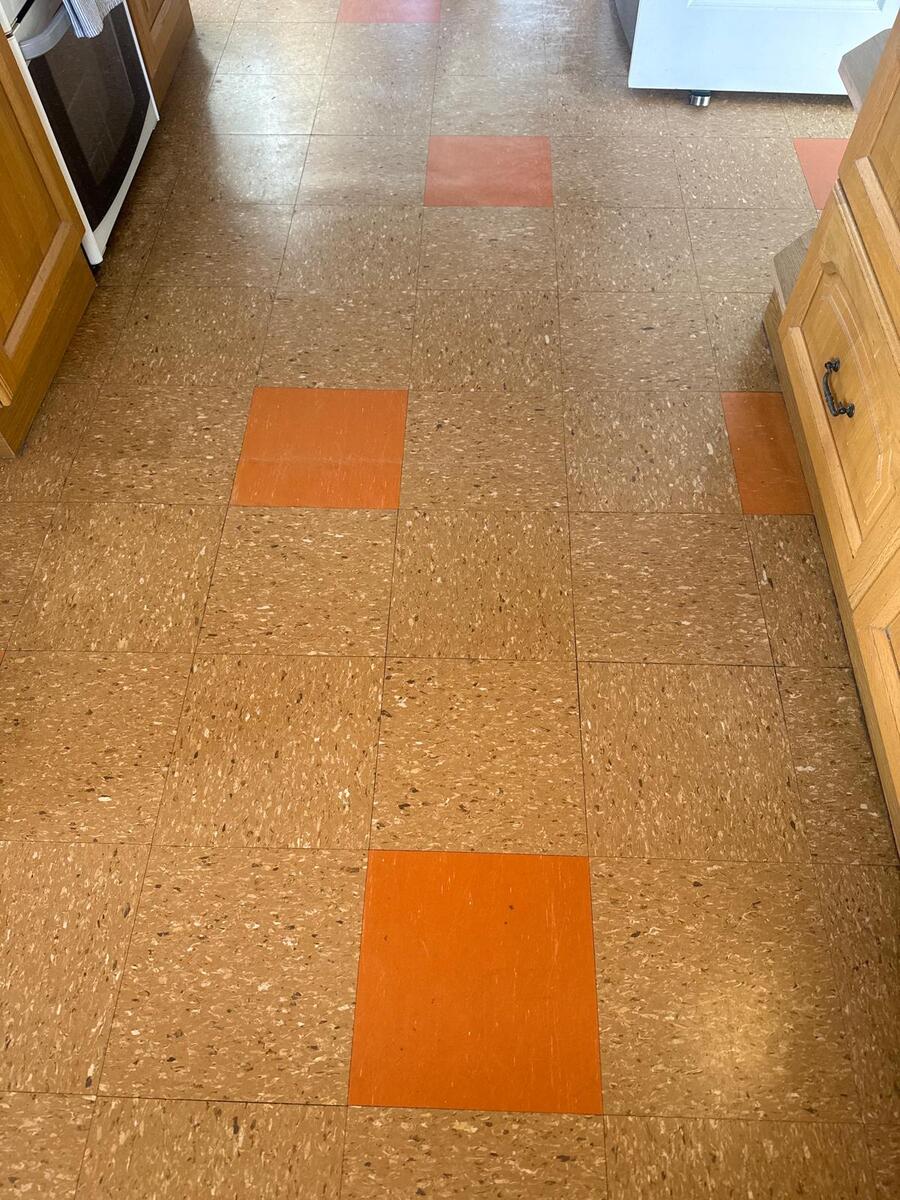
Floor tiles sampled at the Chelmsford property
Floor tiles were another material sampled during the survey. The homeowner’s description of a floor and the fitter’s description may refer to different things. What one person calls “the kitchen floor” might mean the finish they walk on. To the fitter it might include a tiled layer, an adhesive and the surface beneath. Those layers are separate, and the result for one layer does not establish what is present in the others.
The confirmed sampling detail in this project is floor tiles. That detail matters when the survey is read back. It identifies the type of material sampled without implying that adhesive, screed or another layer was also tested. If a flooring contractor later identifies materials that were outside the original survey scope, those materials need to be considered before any work affects them.
There is also a difference between repairing a small section of flooring and changing the way the whole ground floor is finished. For example, a homeowner may ask for a new finish to run between two adjoining rooms. If one room has a different flooring history or there is a patch beyond the doorway, a result for a tile at one location should not automatically be extended to the rest. Checking the record against the area of work helps the contractor see where the information applies.
This is one reason a property owner should keep older reports even after flooring has been changed. A material may be less readily visible later, and the record of the previous finish can help explain why the survey included it. If the layout has changed, compare the former plan with the current site rather than relying on memory alone.
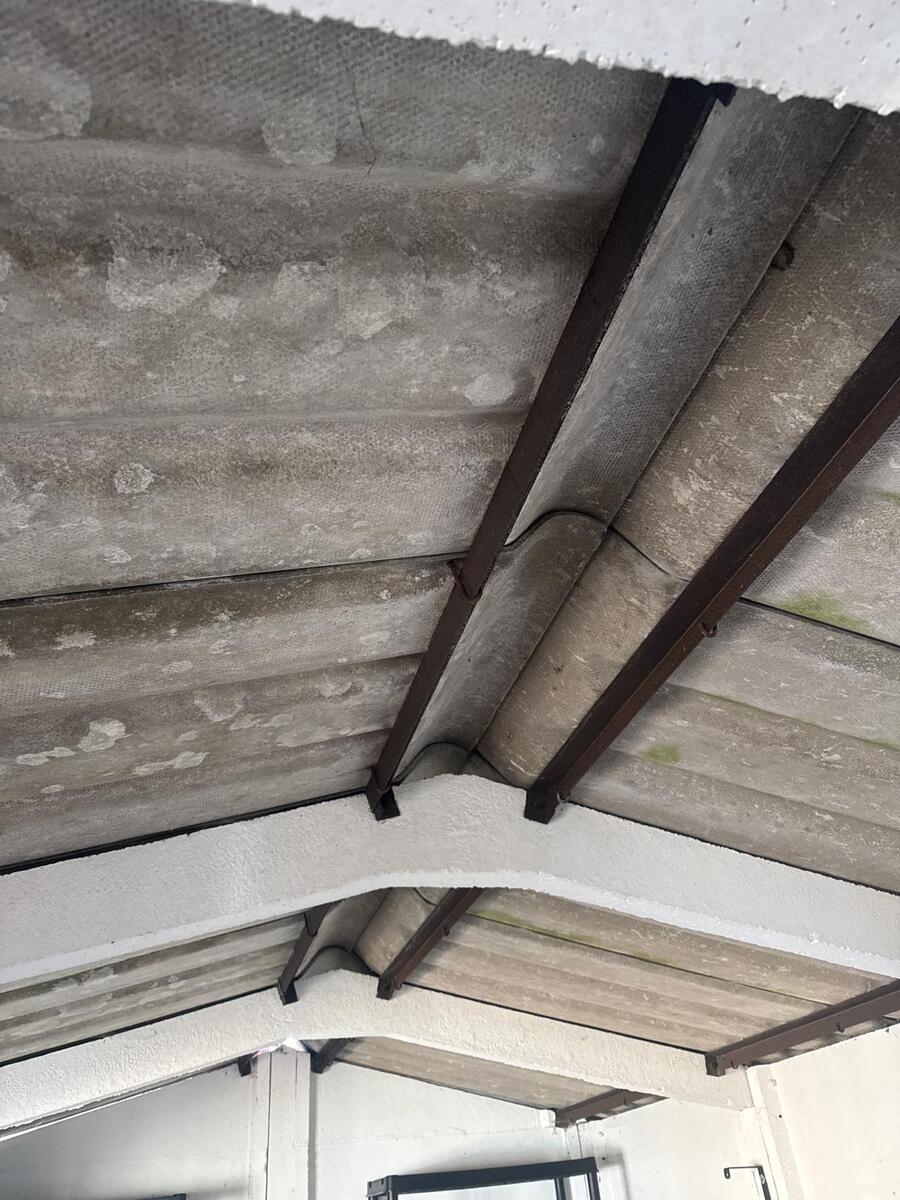
Garage roof sampled as part of the same survey
The third type of material sampled was at the garage roof. Older garage roof coverings are a common reason for a domestic asbestos enquiry. Some older roof sheets can contain asbestos, but a material cannot be reliably identified from appearance alone. The sample taken during this Chelmsford survey related to the garage roof; it does not tell us what other garage components were made of.
Including the garage can make a practical difference when a homeowner eventually requests a quote for roof work. If the contractor describes the job as “replace garage roof”, check whether that means the covering alone or whether other building elements will be affected. A job that involves taking the whole garage down has a wider scope than an enquiry about the roof material. Likewise, if the contractor identifies a junction with another structure, it helps to clarify who controls access and where the work boundary sits.
To see why this matters, consider someone who buys a house with a garage that is currently used for storage. They may have no plans to touch the garage during their first year, but later decide to renew the covering because they want to improve the building. If the survey information is still on file, they can check what was sampled before briefing the contractor. If they instead decide to demolish the garage, the original sampling information can be part of that discussion, but should not be treated as a survey of everything that will be removed.
An enquiry about a garage roof can start with the property address and a description of the proposed work. There is no need to disturb the material to provide those details. If the concern is confined to one specific component, we can discuss whether targeted sampling is appropriate. If the works affect the garage more widely, tell us that from the outset.
What a management survey can help you decide
A management survey is designed to identify asbestos-containing materials, as far as reasonably practicable, that may be disturbed during normal occupation and foreseeable maintenance. Its findings need to be read with the scope, the sample locations and any access limitations. This is particularly useful at a house where the demands on the property may change over time, even if the building itself stays much the same.
When you use the report, start by identifying the actual job. For a decorator, that might mean checking the coating where preparation is planned. For a flooring contractor, check which tiles were assessed and whether other layers are affected. For a roofing contractor, identify the garage and the component due to be worked on. Share the relevant survey information before work begins so the contractor can consider it when planning the job.
If you later commission more intrusive work, such as removing ceilings, stripping flooring down to the structural layer or demolishing the garage, the information needed may extend beyond this kind of survey. Send the scope and the existing report to your surveyor. A refurbishment survey or demolition survey may be appropriate for the parts of the property that will be affected. This is also worth checking when a design changes after an original quote was agreed.
Booking a domestic asbestos survey in Chelmsford
If you are buying, renovating or maintaining a house in Chelmsford, tell us what prompted the enquiry. You may have a homebuyer’s report mentioning a textured finish, a flooring quote that raises questions about older tiles, or a garage roof you plan to replace. Attach the relevant extract, plans or existing survey information if you have them. For work at more than one part of the property, briefly outline each one.
When requesting a quote, include:
* The property postcode and type, with details of any garage or outbuildings to be included.
* The material or area you are concerned about and where it is located.
* Whether the property is occupied and who can provide access.
* What the contractor plans to change, if works are already being planned.
The Chelmsford house in this case study illustrates how several distinct questions can arise on one domestic instruction. The various textured coatings, the floor tiles and the garage roof each had their own place in the survey. Knowing exactly which material was sampled and where makes the information easier to use for the next maintenance job.
Request a quote for a Chelmsford asbestos survey or call 01375 800617. For more information about local coverage, see asbestos surveys in Chelmsford.